Skip to content
BemisgeretBEMISGERET Picture framing studio & art gallery in Jerusalem

Art restoration and repairs

Painting restoration and frame repair in Jerusalem

At Bemisgeret, 29 Derech Beit Lehem in Baka, Jerusalem, we restore paintings and pictures and repair frames. People bring us oil paintings that have torn or yellowed, works on paper with mold and stains, and ornate frames with broken pieces. We examine every piece first, and only once we've seen it do we tell you what can be fixed and what it will cost.

Bemisgeret in Jerusalem repairs and restores oil paintings, works on paper and frames. The studio is a family business run by Mordechai (Mouki) Cohen and the painter Esther (Eti) Agasi Cohen at 29 Derech Beit Lehem in Baka. On oil paintings we repair tears and cracks and remove yellowed varnish, and on works on paper we treat mold and stains. We repair frames by rebuilding missing ornament or by repainting or regilding them with gold leaf, and we also replace broken glass and mats. You get a quote after we examine the piece.

What painting and picture restoration involves

Restoration is the repair of a damaged artwork or frame, to stop the damage and bring the piece closer to how it used to look. We work on oil paintings on canvas, on works on paper such as prints and drawings, and on the frames themselves.

Damage to art usually builds up slowly. Years on a wall facing a window, in a damp room or inside a frame with old cardboard backing all leave their marks, and sometimes a single fall off the wall is enough to tear a canvas or break the corner of a frame.

Every restoration job starts with a consultation. Not all damage can be made to disappear, so we tell you up front what's likely to improve and what will remain. People bring us work from Baka and nearby Jerusalem neighborhoods such as the German Colony, Katamon, Talpiot and Arnona, and on the same visit you can see the studio's other framing and art services.

Oil painting restoration and repair

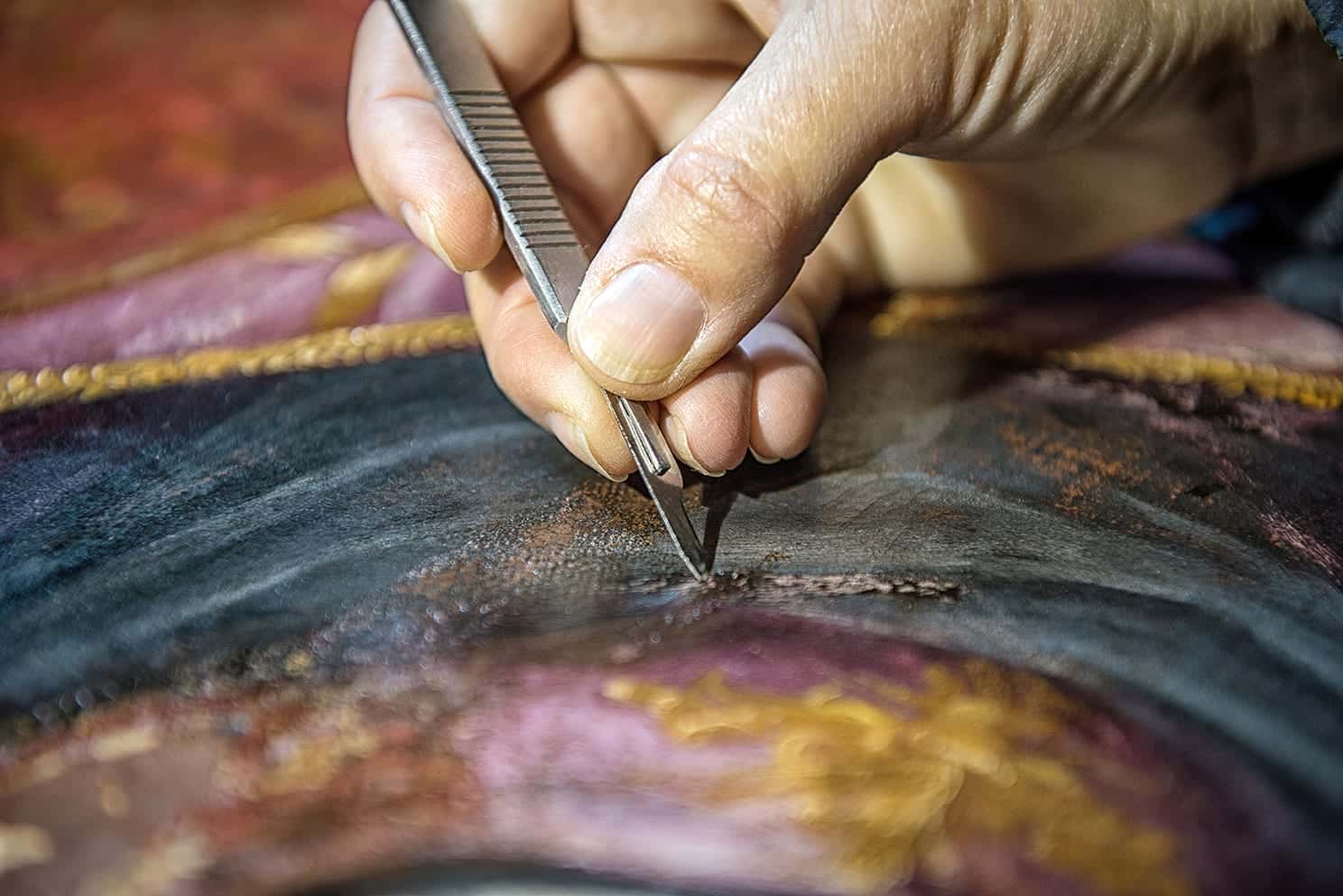
Oil painting restoration means treating the canvas, the paint layer or the varnish, depending on what has been damaged. An oil painting is built up in layers. The canvas is stretched over a wooden stretcher, the paint sits on a ground layer that covers the canvas, and over everything is a clear varnish that protects the painting. Each layer ages at its own pace, so we first find where the problem is and only then decide what to do.

What we do for oil paintings

  • Repairing tears and cracks: A torn canvas usually comes from a knock, a fall or the corner of a piece of furniture during a move. Cracks in the paint appear when the canvas shrinks and expands with changes in humidity and the dry paint is no longer flexible enough to move with it. We repair both the tear and the cracks.
  • Paint retouching: Retouching fills in the areas where paint has flaked, fallen off or faded.
  • Restretching a canvas: A canvas goes slack because the fabric absorbs moisture and dries out again and again, and the wooden stretcher shifts along with it. A slack canvas looks wavy, and over time lines form where it rests against the wood. Restretching makes the canvas flat and taut again.
  • Removing yellowed varnish and cleaning the painting: Varnish yellows and darkens over the years because the resin in it oxidizes in light and air, and dust and soot build up on it as well. Once the old varnish is removed and the painting cleaned, the colors usually look brighter and cooler than you're used to seeing.

Restoring works on paper: mold, stains and tears

Restoring a work on paper means treating the paper itself when it has mold or stains, has yellowed, or is torn. Paper is more sensitive than canvas because it absorbs moisture from the air and acid from anything pressed against it. The small brown spots you see on old prints (known as foxing) form in damp conditions, and the brown line around the image usually comes from an acidic mat or backing board that touched the paper for years.

Mold grows when a work hangs on a damp wall or is stored somewhere closed with no airflow, and it keeps spreading for as long as the conditions stay the same. That's as true of an old family drawing as it is of signed lithographs.

Some stains won't come out completely. The result depends on the type of paper, the colors on it and the age of the stain, and we tell you this when we first examine it.

What we do for works on paper

  • Treating mold on paper: We treat the mold on the paper so it doesn't keep spreading.
  • Lightening paper: Paper that has yellowed or grayed is lightened to bring it closer to its original tone.
  • Removing stains from paper: Water stains, foxing or marks left by old cardboard.
  • Repairing tears in paper: Tears at the edge of the sheet or inside the image are repaired, so the sheet is whole again.
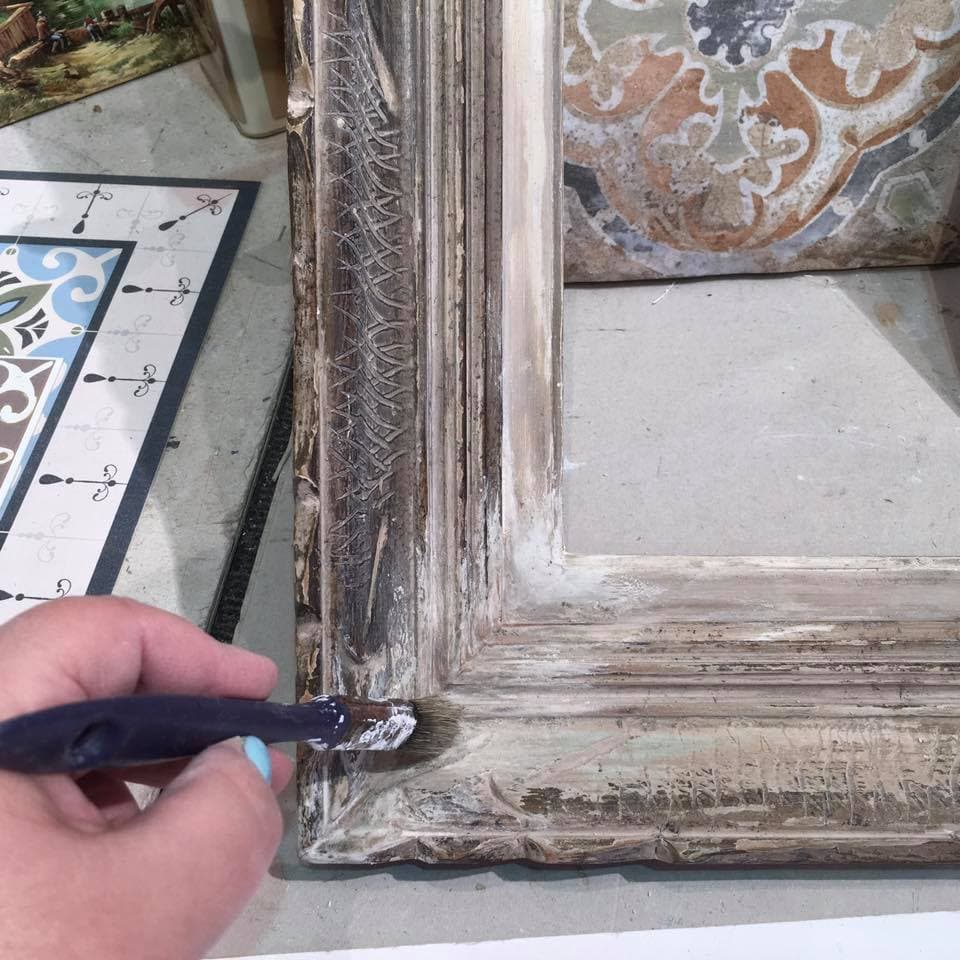
Hand brushing a distressed white finish onto the corner of a carved antique wood frame

Frame repair and antique frame restoration

Frame repair means restoring an existing frame, ornate or plain, instead of replacing it with a new one. Old frames get damaged mostly at the corners and on the raised ornament, because those parts take the blow when a picture falls or gets moved. Old gilding wears and flakes, exposing the ground layer underneath.

It makes sense to repair an antique frame even when it looks rough, because a new frame with the same profile and the same ornament is hard to find today. Mouki does the hands-on, technical work here. He worked with wood and restored antique furniture before we ever had a studio, as our story tells.

What we do for frames

  • Rebuilding missing ornament: We replace a missing part of an ornate frame's decoration, such as a leaf, a corner or a section of the pattern, and match it to the rest of the frame.
  • Sanding and repainting: A wooden frame whose paint has faded, cracked or been scratched is sanded and repainted.
  • Regilding with gold leaf: For frames whose gilding has worn away or flaked off.
  • Gold, silver or bronze paint: A metallic finish in a tone that suits the frame.
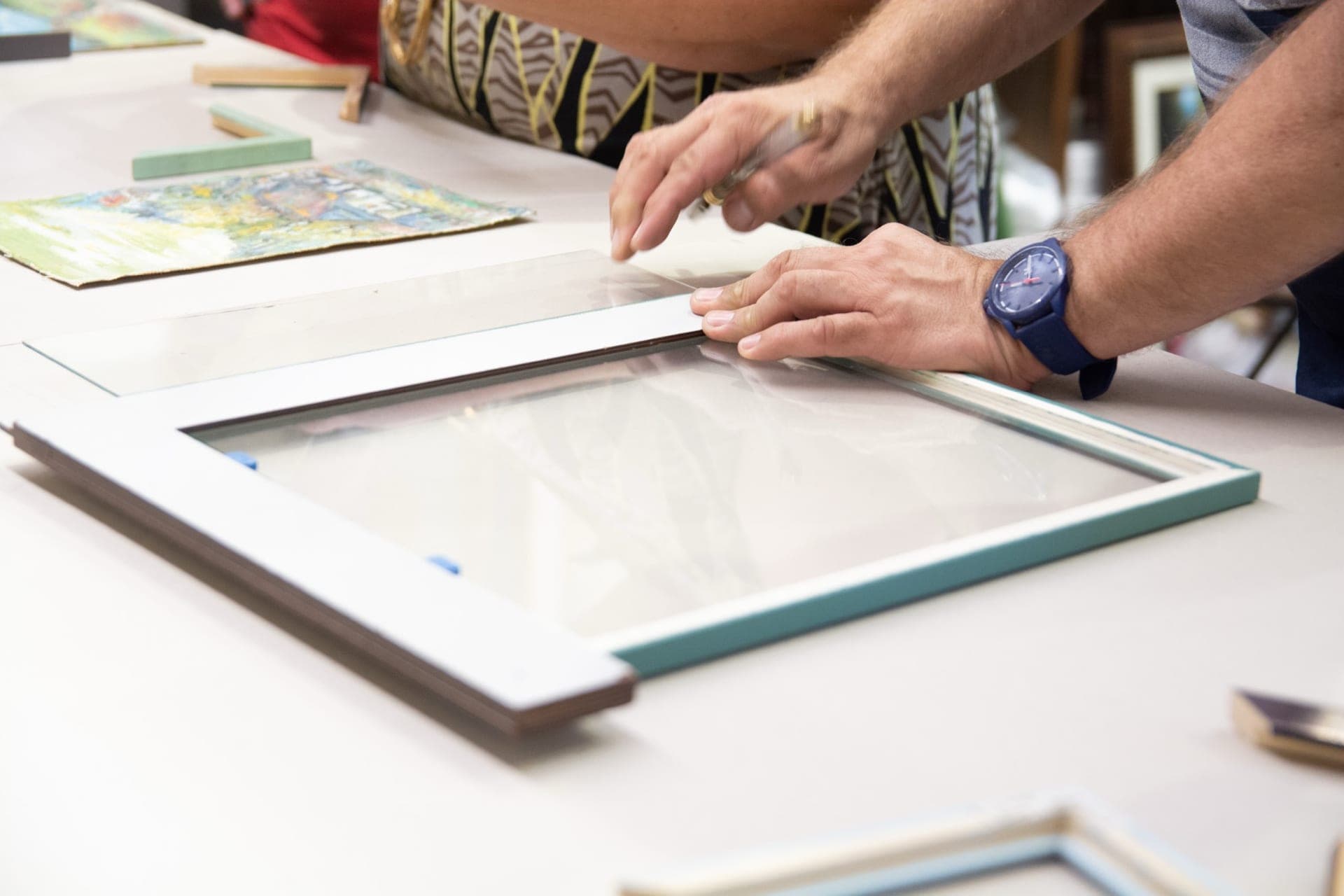
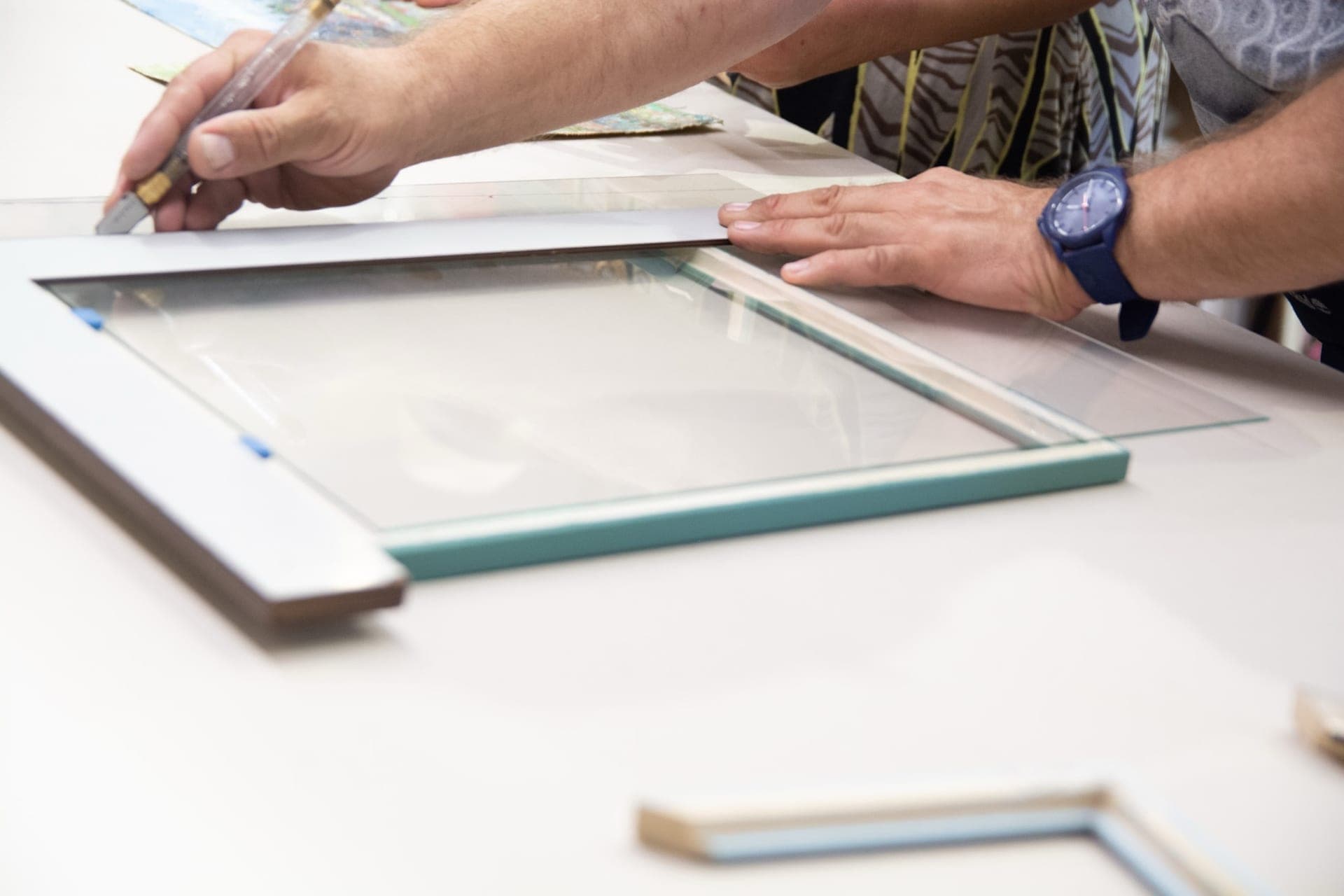
Hands holding a straightedge on a pane of glass over a teal frame on the worktable

Replacing broken glass and mats

Replacing broken picture glass or a mat is a small repair that doesn't involve restoring the artwork itself. Cracked or broken glass is replaced with new glass in the same frame. If the picture fell, we also check that the shards didn't scratch the artwork and that the frame corners haven't come loose.

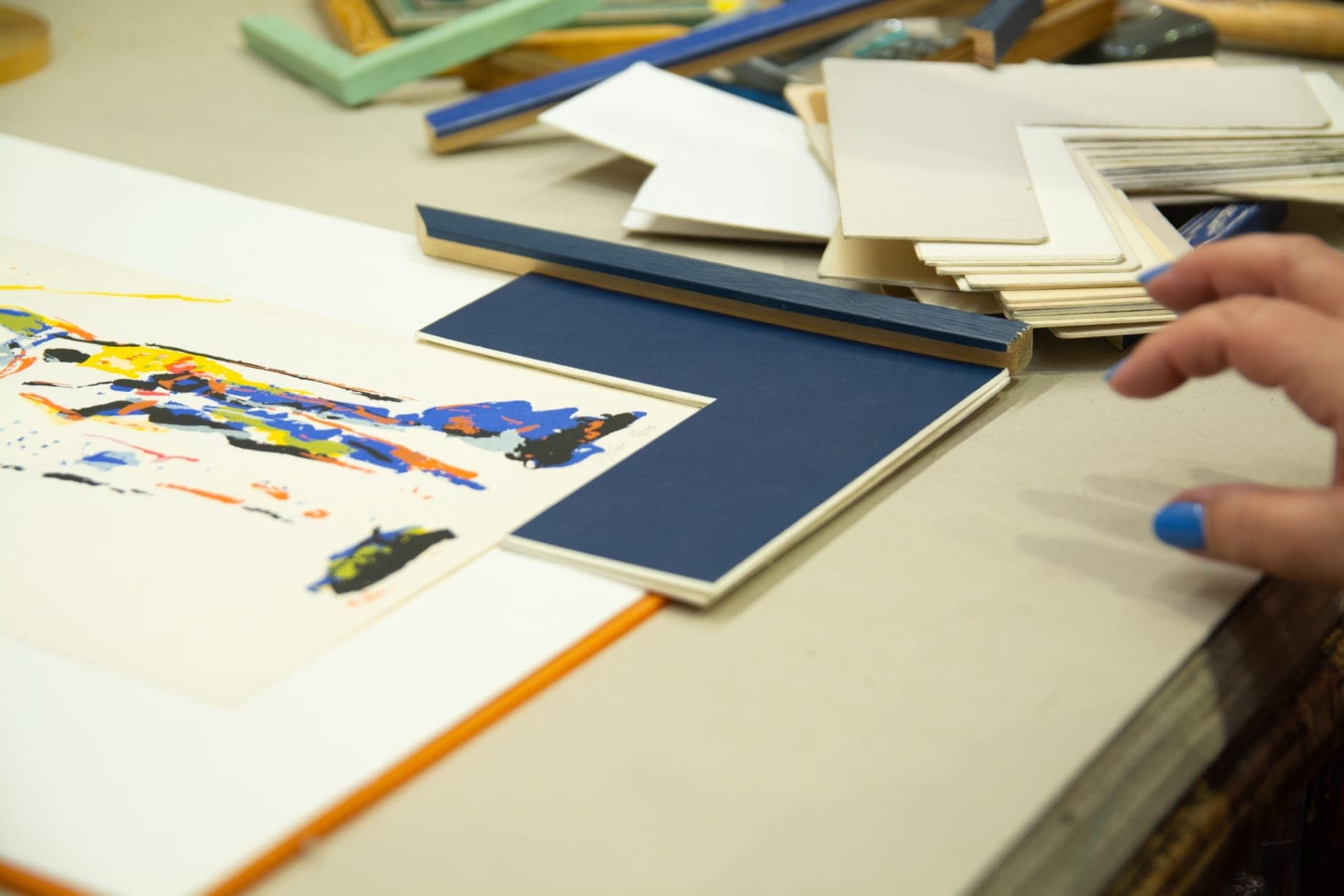
A yellowed or stained mat can be replaced, and one that has come away can be reattached. When we replace a mat, we recommend an acid-free mat, because an acidic mat is one of the causes of that brown line on the paper.

What to do until you bring it in

Until the piece comes in to be examined, don't try to fix it yourself. Cleaning a painting at home with a damp cloth, soap, alcohol or window spray can dissolve the varnish and the paint beneath it, and that kind of damage is much harder to repair than dirt. Tape on a tear also leaves adhesive that soaks into the canvas or paper.

A photo of the damage helps us tell you whether to bring the piece in as it is. Send it on WhatsApp to 052-5413669, or find the other ways to reach us on our contact page.

Four rules for the meantime

  • Leave the damaged area alone: Don't wipe it, don't scrape mold off it and don't try to flatten a tear.
  • Don't roll it up: Keep a painting or work on paper flat or standing upright, because rolling cracks dry paint and breaks old paper.
  • Keep it away from damp and sun: Move the piece to a dry, shaded room with no damp walls and no window that lets the sun in.
  • Save every piece that fell off: A bit of ornament, a flake of gilding or a corner that came off the frame goes into a bag and comes in with it, because putting an original piece back is easier than making a new one.
Hand choosing mat samples beside a blue frame corner and an abstract print

After restoration: conservation framing that prevents the next damage

Conservation framing uses materials that don't harm the artwork, meaning an acid-free mat and museum glass that filters UV light. A lot of damage starts with the framing itself, from acidic board that yellows the paper or ordinary glass that lets the sun fade the colors.

After the repair, we can reframe the piece here in the same studio, with custom framing using acid-free mats and museum glass. All our frames are wood, some made in Israel and some imported from Italy.

Where it hangs makes a difference too. A damp exterior wall or a wall in direct sun shortens the life of any artwork, so think about that before you hang it back up.

How to start a restoration with us

  1. Bring the piece in or send a photo

    You can bring the painting, work on paper or frame to the studio at 29 Derech Beit Lehem in Baka. If you'd rather ask first, send a photo on WhatsApp or call, and we'll give you an initial assessment.

  2. Examination and advice

    We look at the piece closely and explain what's damaged, what can be fixed and what will probably remain.

  3. Quote

    After the examination you get a quote. There's no fixed price list, because every piece comes in with different damage and in a different size. We start only after you approve.

  4. Repair and pickup

    When the work is done, we let you know and you come to pick it up. At pickup you can also choose new framing for the piece.

Refinishing and repainting at the studio

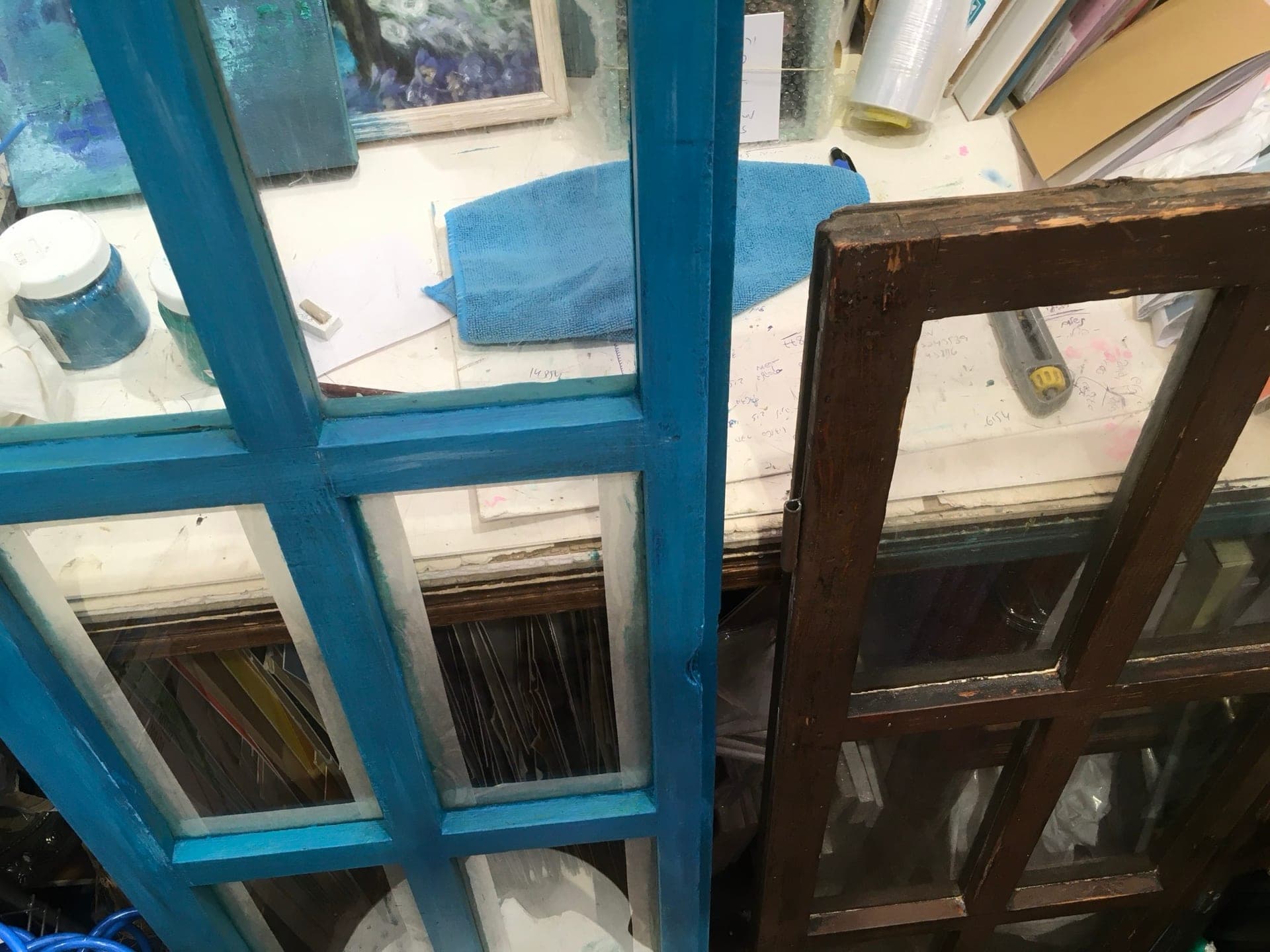
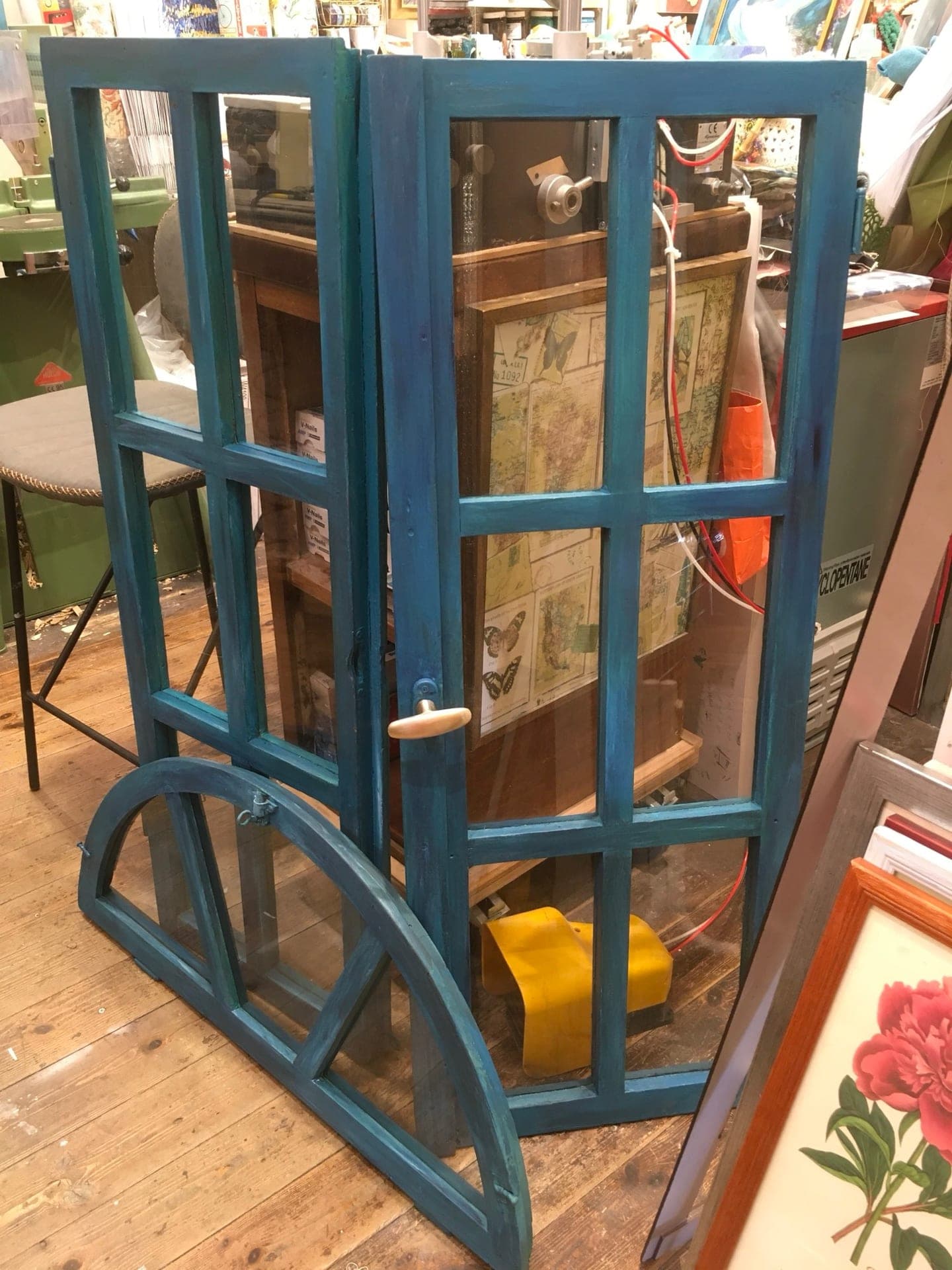
Before and after, an old brown window sash beside one repainted blue-teal
Pair of antique window sashes and a wooden arch painted blue at Bemisgeret in Jerusalem
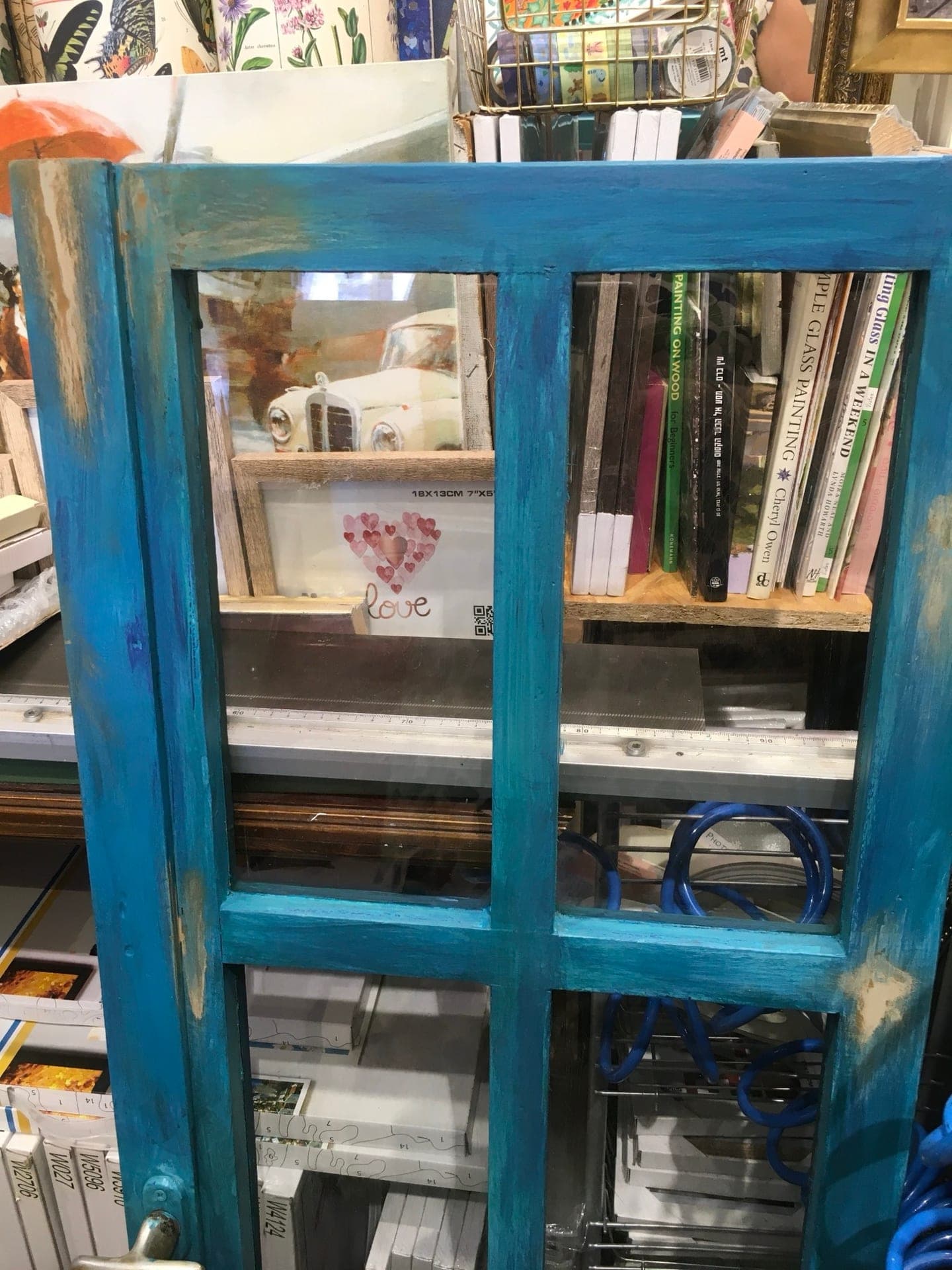
Old wooden window repainted in blue-teal, with studio shelves behind it

Questions about painting restoration and frame repair

How much does painting restoration cost in Jerusalem?

There's no fixed price list for painting restoration, because the price depends on the size of the piece, the type of damage and how much work it needs. A small tear in a corner and cleaning a large painting that has yellowed all over are two completely different jobs. So we examine the piece at our studio in Baka first and only then give you a quote. For an initial idea, send a photo on WhatsApp to 052-5413669 or call 02-6714005.

Can a tear in an oil painting be repaired?

Yes, repairing tears in oil paintings is one of the things we do, and afterward we retouch the paint in the damaged area. How the repair looks in the end depends on the size of the tear, where it is in the painting and the condition of the canvas around it, so we examine the painting before promising anything. Until you bring it in, don't put tape on the tear and don't roll up the canvas.

What can be done about yellowed varnish on a painting?

Yellowed varnish is removed, and then the painting is cleaned. Varnish is a clear protective layer over the paint. Over the years it yellows and darkens in light and air, until the whole painting looks browner than it was painted. Removing yellowed varnish is delicate work that you shouldn't try at home, because a solvent that dissolves varnish can dissolve paint too. Bring the painting in and we'll tell you what condition it's in.

Can mold and stains be removed from a work on paper?

Yes, we treat mold on paper, remove stains and lighten paper that has yellowed. The result depends on the type of paper and how long the stain has been there, and some stains only fade without disappearing. Mold keeps spreading as long as the work stays damp, so move it to a dry room and bring it in for a look as soon as you can.

Do you repair antique frames instead of replacing them?

Yes, we repair antique frames, ornate ones included, rather than replacing them. The repair can include rebuilding missing parts of the ornament, sanding and repainting, or regilding with gold leaf. Keep any pieces that fell off the frame and bring them in with it. Once we see the frame, we'll tell you whether it can be restored and what the repair will cost.

Can you replace just the broken glass in a picture frame?

Yes, we can replace only the broken glass and leave the frame and the picture as they are. Bring the picture in its frame, lying flat and face up, so the shards don't scratch it on the way. At the same time you can replace a yellowed mat or switch to museum glass that filters UV light, and we check that the artwork itself wasn't damaged.

Do I need to bring the piece in, or can I start with a photo?

You can start with a photo. Send us a shot of the whole piece and a close-up of the damage on WhatsApp to 052-5413669, or call the studio at 02-6714005, and we'll tell you whether it's something we handle. A final quote comes only after we've seen the piece itself, because a photo doesn't show the condition of the canvas or paper, or the back. The studio is at 29 Derech Beit Lehem in Baka, Jerusalem.

Should I clean an oil painting myself at home?

It's better not to clean an oil painting yourself. Soap and water, alcohol or cleaning spray can dissolve the varnish and lift the paint underneath, and even a dry cloth can pull off loose flakes of paint. What you can do is dust the frame and the glass without touching the painting itself. If a painting has gone dark or yellow, or just looks dirty, bring it to us to be examined.

More from the studio

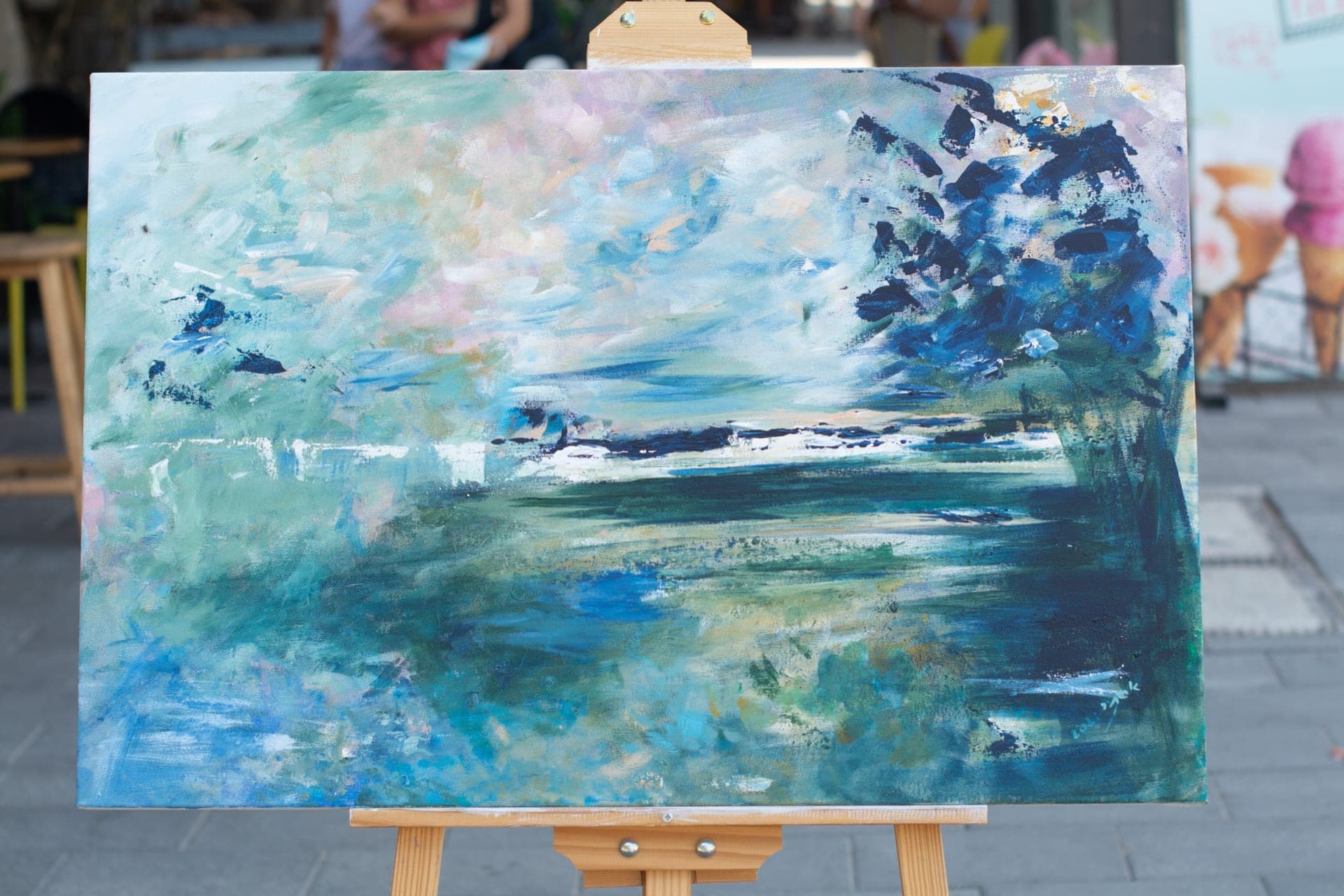
Abstract blue and green landscape on stretched canvas, on an easel in the street

Art Gallery

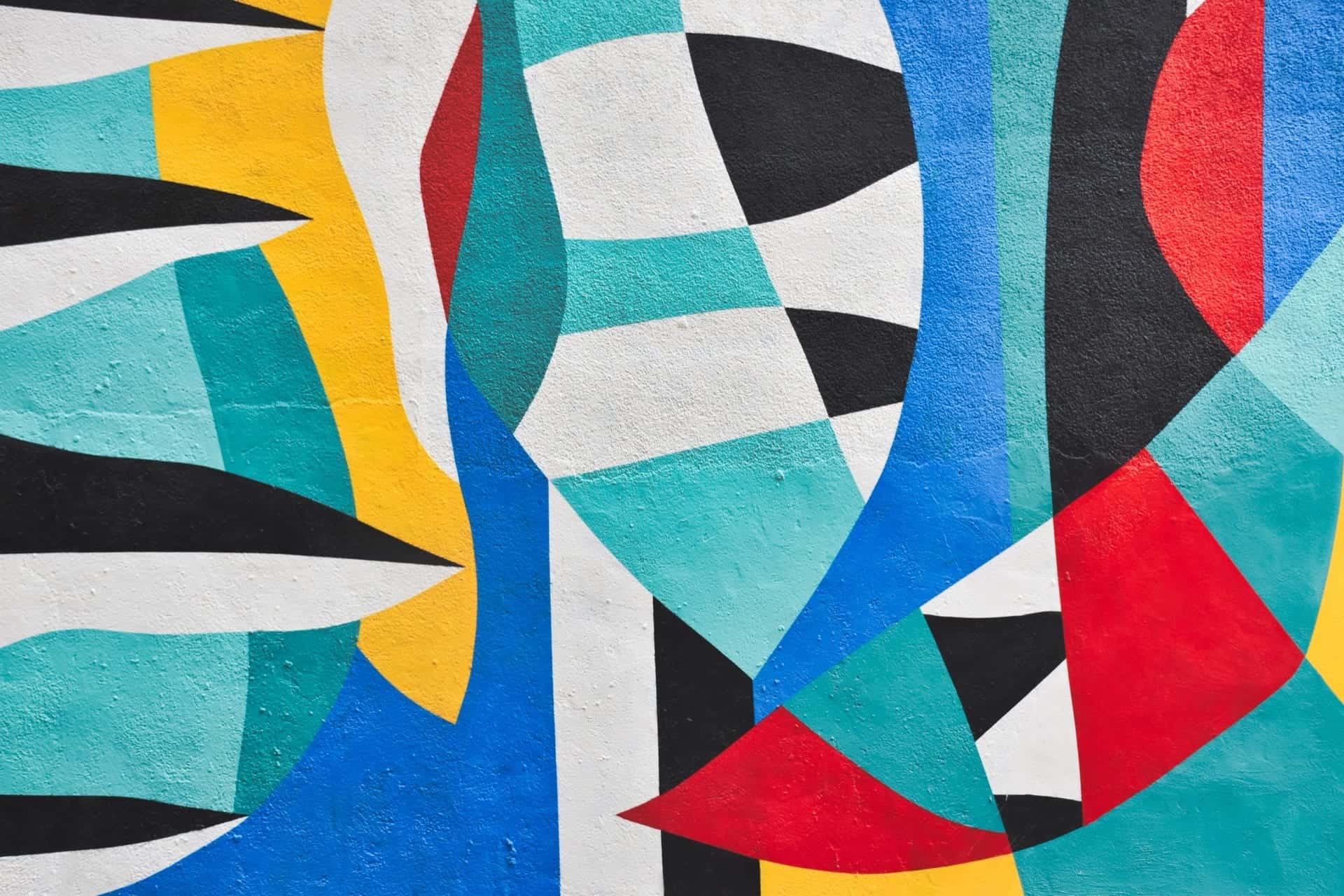
Our gallery, inside the framing studio in Baka, has original paintings by Israeli artists. Most of what you'll see are oil paintings by Esther Agasi Cohen, the house artist and Mouki's partner, alongside lithographs by great artists such as Nachum Gutman, Moshe Castel, Yehudit Yellin and Yosl Bergner. There are also canvas prints by Esther, which she finishes with touches of paint (giclée), and limited-edition serigraphs on wood by Adriana Nave. An online catalog is in the works, so for now you see the work at the studio itself. Some pieces are already framed, and the rest can be framed on site.

Art gallery in Baka, Jerusalem: original paintings, lithographs and prints
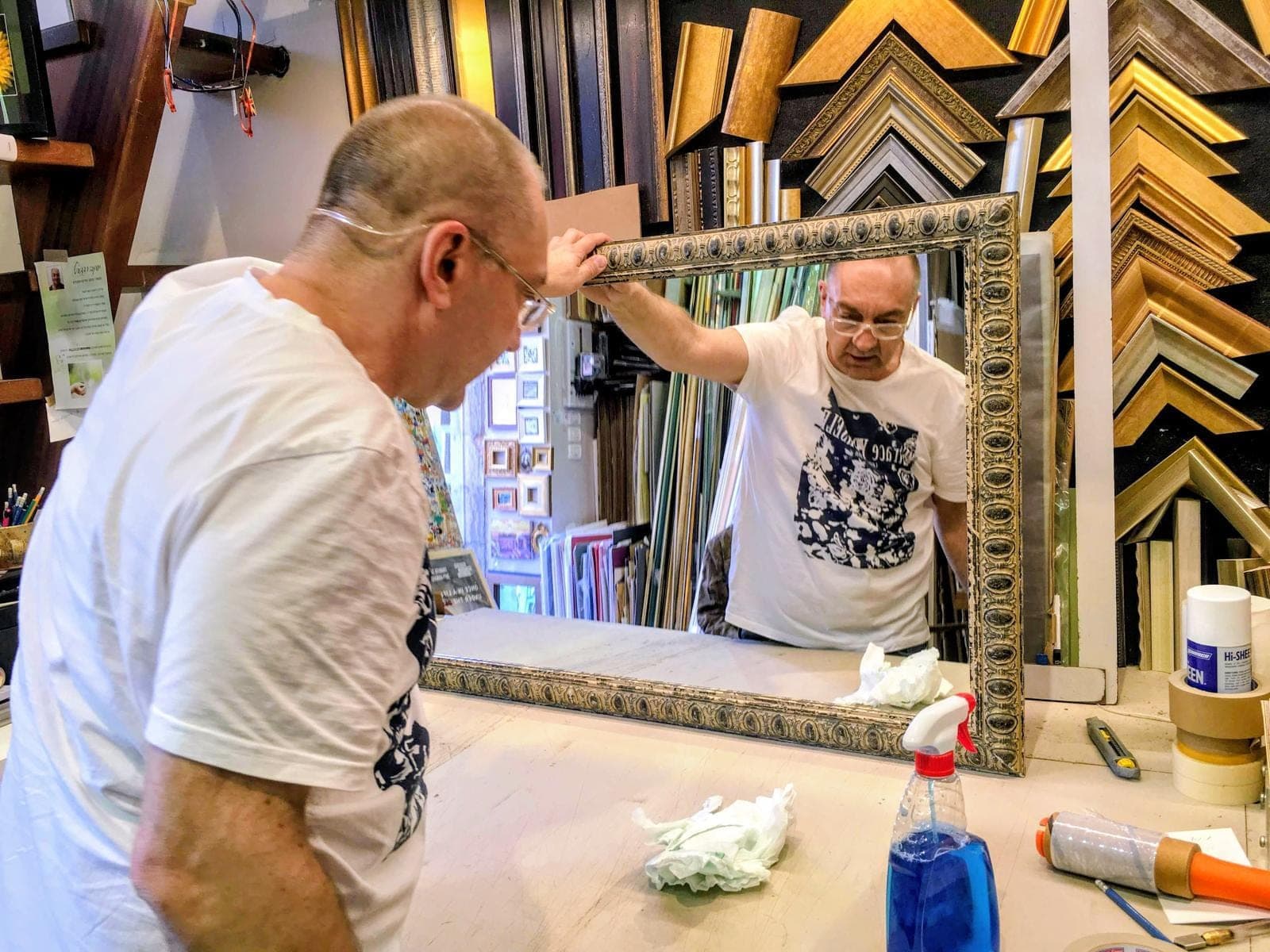
Mouki Cohen cleaning a custom mirror in an ornate antique-gold wooden frame

Custom Mirrors

Made-to-measure mirrors in Belgian mirror glass and solid wood frames. You choose the profile and color from a huge selection of profiles, the same ones we use to frame pictures, so the mirror can match the style of the frames already hanging in your home. Our mirrors are rectangular or square, and they always have a frame.

Custom mirrors in Jerusalem, made to measure in wood frames

Talk to us

Bring your piece to our Baka studio for a look

We're at 29 Derech Beit Lehem, Jerusalem, Sunday to Thursday 9:30 am to 6 pm and Friday 9:30 am to 1:30 pm. You can also call 02-6714005 or send a photo of the damage on WhatsApp to 052-5413669, and we'll get back to you with an initial assessment.

29 Derech Beit Lehem, Baka, Jerusalem · Sunday to Thursday 9:30 am to 6 pm · Friday 9:30 am to 1:30 pm